
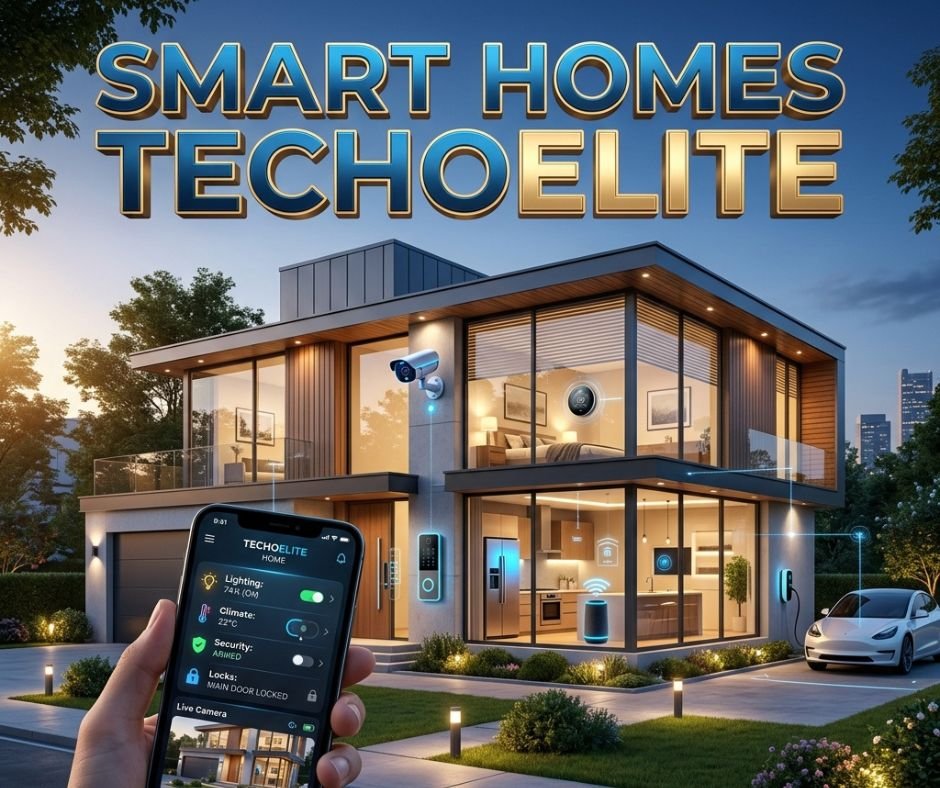

Imagine controlling your lights, locks, temperature, and security from one simple system. That is the power of Smart Homes TechoElite, a modern approach to making everyday living safer, easier, and more efficient. If you want to understand how smart home technology works, which devices matter, and whether automation is worth the investment, this guide has you covered.
Smart homes connect everyday appliances and systems so you can manage them remotely, automate routine tasks, and monitor your property more effectively. From smart home automation and intelligent security to energy savings and connected appliances, there is plenty to explore. Let’s discover the key features, benefits, technologies, setup process, challenges, and future of smarter living.
What Is Smart Homes TechoElite? (Definition and Core Concept)
At its core, Smart Homes TechoElite refers to a category of home automation system that connects household devices lighting, thermostats, locks, cameras, and appliances through a shared network so they can be controlled, monitored, and automated from a single interface. Instead of flipping switches or adjusting dials manually, you manage everything through a smartphone app, a voice assistant, or automated schedules that run in the background.
The idea behind smart living isn’t just about convenience, though that’s a big part of it. It’s about creating a home that adapts intelligently to your routines, your energy use, and your safety needs. A properly configured connected home learns when you typically arrive, adjusts temperature accordingly, and can even alert you the moment something unusual happens, like a door left unlocked or a window opened after dark.
How Smart Homes TechoElite Differs from a Traditional Smart Home Setup
A basic smart home might involve a couple of smart bulbs and a voice assistant, and that’s perfectly fine for casual users. TechoElite Smart Homes, however, typically refers to a more integrated, whole-home approach where devices from different categories talk to each other through a central hub or software platform. Instead of managing five separate apps for five separate brands, everything sits under one smart home ecosystem, which means your lights, locks, and thermostat can trigger each other automatically based on real conditions rather than requiring you to control each one manually.
How Smart Homes TechoElite Works: The Technology Behind the System
Every automated home relies on three basic building blocks: sensors that collect data, a hub or software layer that processes it, and actuators (like a smart lock or light switch) that carry out the resulting action. When you walk through your front door, a motion sensor or door sensor sends a signal to the hub, which then checks your predefined rules and might turn on the hallway light, disarm the security system, and start warming up the living room, all within a few seconds.
What makes smart home automation genuinely useful is the layering of these small automations into routines that mirror how you actually live. For example, a “goodnight” routine might lock every door, lower the thermostat by three degrees, turn off all lights except a dim nightlight, and arm the security cameras, all triggered by one voice command or a single tap. This is fundamentally different from older home automation attempts, which required separate remotes and manual timers for each device.
Sensors, Hubs, and Connectivity Explained
Sensors are the eyes and ears of any automated home. Motion sensors detect movement, contact sensors know when a door or window opens, and environmental sensors track temperature, humidity, or air quality. These smart sensors constantly feed data to a central hub, which acts like the brain of the operation, interpreting inputs and deciding what actions to trigger. Connectivity between these components typically relies on Wi-Fi, Bluetooth, Zigbee, or Z-Wave, each with different range and power trade-offs that we’ll cover later in this guide.
The Role of AI and Machine Learning in Automation
AI-powered home automation takes basic “if this, then that” logic a step further by learning patterns over time. Rather than requiring you to manually program every rule, machine learning models can notice that you consistently lower the thermostat around 10 p.m. and start suggesting or automatically applying that adjustment. According to research from the Pew Research Center, adoption of AI-assisted smart devices in U.S. households has grown steadily as consumers get more comfortable trusting predictive automation. This predictive layer is what separates a genuinely intelligent home from a simple collection of remote-controlled gadgets.
Key Features of Smart Homes TechoElite
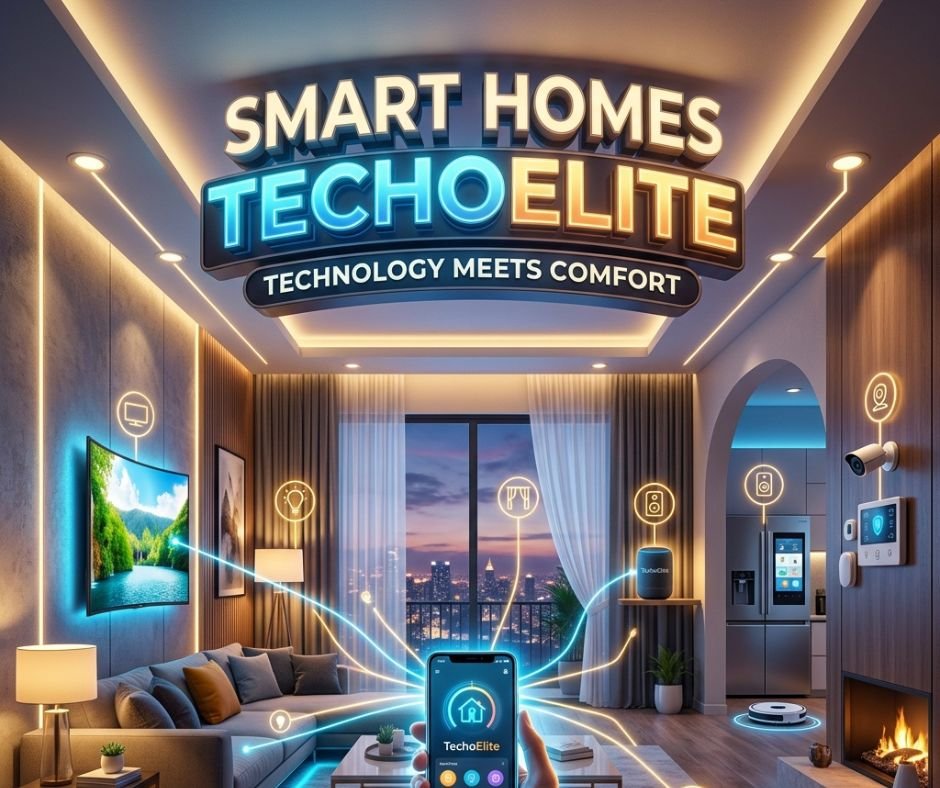
Most TechoElite Smart Homes installations share a common set of core features, even though the specific brands and devices vary from household to household. Understanding these features helps you decide which ones matter most for your situation, since not every homeowner needs the same level of automation.
| Feature | What It Does | Typical Use Case |
| Voice control | Lets you operate devices hands-free | Turning off lights without getting up |
| App-based management | Centralizes control on your phone | Checking who’s at the door while away |
| Automated routines | Runs multiple actions from one trigger | “Good morning” scene adjusting lights and temperature |
| Remote access | Controls devices from anywhere with internet | Unlocking the door for a delivery |
| Energy monitoring | Tracks usage of connected devices | Identifying which appliance spikes your bill |
Voice Control and App-Based Management
Voice assistants like Amazon Alexa, Google Assistant, and Apple Siri have become the primary interface for most smart homes because they remove the friction of pulling out your phone. You simply say what you want, and the connected device responds within seconds. Meanwhile, smartphone home control apps give you a visual dashboard, which is especially useful for checking device status, reviewing camera footage, or adjusting settings that voice commands can’t easily handle, like fine-tuning a thermostat schedule.
Automated Routines and Scheduling
Routines let you bundle several actions into a single trigger, whether that’s a specific time, a voice command, or a sensor event. For instance, a “leaving home” routine might lock the doors, turn off all lights, lower the thermostat, and activate the security cameras the moment your phone’s GPS confirms you’ve left the geofenced area. This kind of personalized home automation removes the mental load of remembering to do these things yourself every single day.
Top Benefits of Choosing a Smart Homes TechoElite System
The appeal of smart home technology goes well beyond novelty. Homeowners who invest in a properly configured system typically report real improvements in daily convenience, safety, and long-term cost savings. Because the system runs largely in the background, the benefits accumulate quietly rather than requiring constant attention.
Convenience is the most immediately noticeable benefit, but it’s far from the only one. A connected home also improves peace of mind, since you can check in on your property from anywhere, receive instant alerts about unusual activity, and control access for guests or service providers without handing out physical keys. For many households, the combination of these small conveniences adds up to a noticeably lower-stress living environment.
Convenience and Time Savings
Automating repetitive tasks, like adjusting blinds at sunset or turning off forgotten lights, saves you dozens of small decisions every day. Over a year, those saved seconds and reduced mental clutter genuinely add up, especially for busy households juggling work, kids, and errands.
Accessibility for Elderly and Disabled Residents
Smart home solutions offer significant independence benefits for elderly or disabled residents who might struggle with physical switches, locks, or thermostats. Voice-activated controls mean a resident with limited mobility can adjust lighting or call for help without moving from a chair, and automated fall-detection or emergency alert systems can notify family members or emergency services immediately if something goes wrong. This accessibility angle is one of the most meaningful, yet often overlooked, advantages of home automation technology.
Smart Security and Safety Features in TechoElite Homes
Security is frequently the top reason homeowners adopt intelligent home technology in the first place. A modern home monitoring system combines cameras, sensors, and smart locks into a coordinated network that watches your property continuously and reacts faster than a human ever could. Instead of simply recording footage for later review, these systems can send real-time alerts, trigger alarms, or even contact authorities automatically.
Beyond intrusion detection, automated home security also covers everyday safety concerns like smoke, carbon monoxide, and water leak detection. A smart water sensor placed near your water heater, for example, can shut off the main water valve automatically the moment it detects a leak, potentially saving thousands of dollars in flood damage while you’re at work or asleep.
Smart Locks, Cameras, and Motion Sensors
Smart locks let you grant temporary access codes to guests, dog walkers, or contractors without ever handing over a physical key, and you can revoke that access instantly from your phone. Smart cameras and video doorbells add a visual layer, letting you see and speak with visitors in real time, whether you’re upstairs or across the country. Motion sensors tie these components together by triggering recordings or alerts only when actual movement is detected, which saves storage space and reduces false alarms compared to continuous recording.
Emergency Alerts and Remote Monitoring
Remote home control extends to emergency scenarios as well. If a smoke detector triggers or a door sensor detects entry while your security system is armed, you’ll typically receive a push notification within seconds, along with live camera access so you can assess the situation immediately. Many systems also allow you to loop in professional monitoring services that dispatch emergency responders if you’re unreachable, adding another layer of protection beyond what a self-monitored setup provides.
Energy Efficiency and Cost Savings with Smart Homes TechoElite
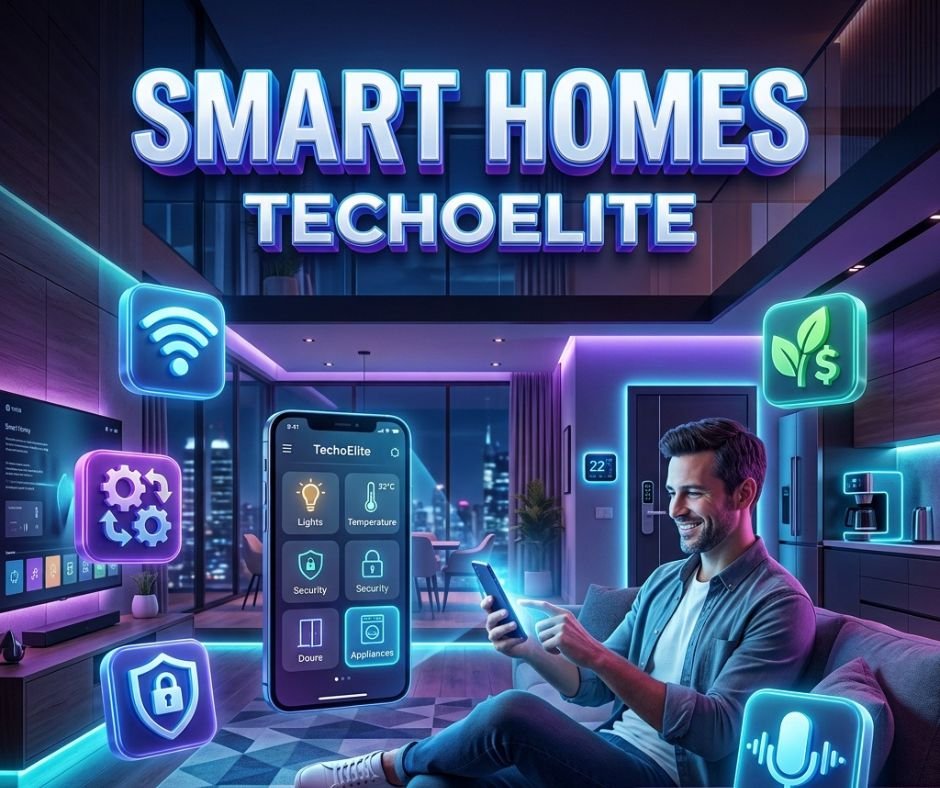
One of the most practical arguments for investing in energy-efficient homes technology is the potential reduction in monthly utility bills. According to the U.S. Department of Energy, heating and cooling account for nearly half of a typical home’s energy use, which makes smart thermostat optimization one of the highest-impact upgrades available. By learning your schedule and adjusting temperatures automatically when you’re away, these devices reduce wasted energy without requiring you to remember anything.
Home energy management goes beyond just the thermostat, though. Smart plugs and outlets let you monitor exactly how much electricity individual appliances consume, which often reveals surprising culprits like an old refrigerator or a gaming console left in standby mode. Combined with smart lighting that automatically turns off in unoccupied rooms, these small adjustments compound into meaningful annual savings.
Smart Thermostats and Lighting Automation
A smart thermostat like Nest or Ecobee typically pays for itself within one to two years through reduced heating and cooling costs, particularly in climates with extreme summers or winters. Pairing that with automated lighting systems that respond to occupancy sensors ensures you’re never paying to light or cool empty rooms, which is one of the simplest ways to trim a utility bill without sacrificing comfort.
Estimated Monthly and Annual Savings
While actual savings vary by home size, climate, and existing efficiency, the Environmental Protection Agency’s ENERGY STAR program estimates that smart thermostats can save households roughly 8% on heating and cooling costs annually. For a household spending $2,000 a year on climate control, that translates to meaningful savings that continue year after year, making the upfront device cost a relatively quick recovery.
Step-by-Step Guide: How to Set Up a Smart Home TechoElite System
Getting started doesn’t require an electrician or a massive upfront investment. Most homeowners can begin with a handful of devices and expand gradually as they get comfortable with the smart home installation process. Follow these steps to build a solid foundation.
- Assess your priorities. Decide whether security, energy savings, or convenience matters most to you, since this shapes which devices you buy first.
- Choose a central hub or platform. Pick an ecosystem (Amazon Alexa, Google Home, or Apple HomeKit) that will serve as your control center.
- Start with high-impact devices. A smart thermostat, a few smart bulbs, and a video doorbell typically deliver the most noticeable benefits early on.
- Connect devices to your Wi-Fi network. Most devices walk you through this using their companion app during initial setup.
- Create your first automated routine. Something simple, like lights turning on at sunset, helps you understand how automation logic works.
- Test thoroughly before relying on it. Confirm sensors trigger correctly and notifications actually reach your phone.
- Expand gradually. Add locks, cameras, and additional sensors once you’re confident the basics are working reliably.
Choosing the Right Hub and Devices
Your hub choice affects which devices you can use later, so it’s worth researching compatibility before buying anything. Amazon and Google ecosystems tend to offer the widest third-party device support, while Apple HomeKit is generally more selective but offers tighter privacy controls, which matters if data security is a priority for you.
Installation Tips for Beginners
Start small and resist the urge to automate everything at once. Label your devices clearly within the app using room names, test each new addition individually before combining it into a routine, and keep your router’s firmware updated, since a stable network is the foundation every other device depends on.
Smart Home Ecosystems, Compatibility, and Connectivity
Not all smart home devices speak the same language, which is why understanding connectivity protocols matters before you start buying equipment. Compatibility issues are one of the most common frustrations reported by new smart home owners, and most of these problems trace back to mixing incompatible standards without realizing it.
The good news is that the industry has been consolidating around shared standards in recent years, making smart home compatibility far less painful than it used to be. Understanding the differences between these protocols helps you avoid buying devices that end up sitting in a drawer because they can’t talk to your existing setup.
Matter, Zigbee, Z-Wave, and Wi-Fi Explained
| Protocol | Best For | Range | Power Use |
| Wi-Fi | Cameras, video doorbells | Long | High |
| Zigbee | Sensors, bulbs, small devices | Medium | Low |
| Z-Wave | Locks, larger home coverage | Medium-long | Low |
| Matter | Cross-brand compatibility | Varies by device | Varies |
The Matter smart home standard, backed by Amazon, Google, Apple, and Samsung, was created specifically to solve cross-brand compatibility headaches by letting devices from different manufacturers work together without proprietary hubs. Zigbee smart devices and Z-Wave home automation products remain widely used for low-power sensors and locks, particularly because they don’t compete with your Wi-Fi bandwidth the way camera-heavy setups do.
Making TechoElite Work with Alexa, Google Home, and Apple HomeKit
Most modern Wi-Fi-enabled devices advertise compatibility with all three major platforms, but it’s worth double-checking product listings before purchasing, since some features (like advanced automation logic) only work fully within one ecosystem. If your household already uses iPhones exclusively, HomeKit often provides the smoothest experience, while mixed-device households frequently find Google Home or Alexa easier to manage across platforms.
Costs, Limitations, and Common Challenges of Smart Homes TechoElite
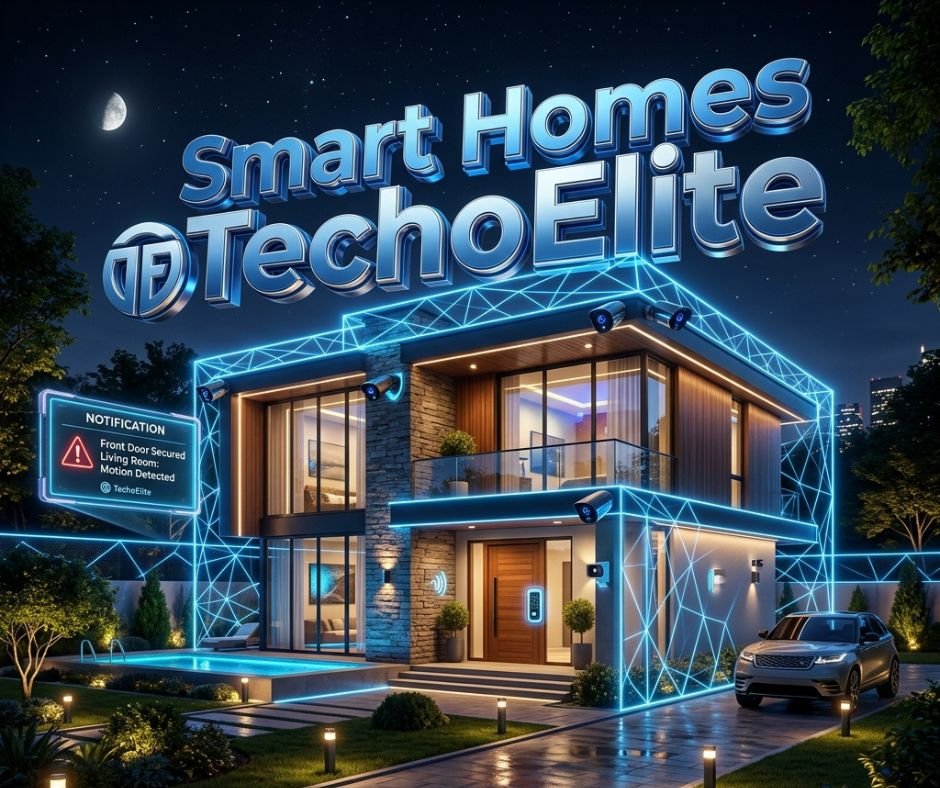
Budgeting for a smart home varies enormously depending on scope. A basic starter kit with a smart speaker, a couple of bulbs, and a plug might cost under $150, while a fully integrated whole-home system with professional installation, cameras, and security monitoring can run into several thousand dollars. Understanding where your money goes helps you avoid overspending on features you won’t actually use.
Beyond cost, smart home privacy and reliability concerns deserve honest attention. Internet outages can temporarily disable remote access, and any internet-connected device introduces some level of exposure to hacking attempts if not properly secured. Being aware of these limitations upfront helps you make informed decisions rather than being caught off guard later.
Upfront vs. Long-Term Investment
While the initial purchase and installation costs can feel significant, many devices particularly smart thermostats and LED lighting generate ongoing savings that offset the upfront expense over time. It’s worth thinking of smart home spending less as a single purchase and more as a gradual investment you build out over months or years as budget allows.
Privacy, Data Security, and Hacking Risks
Smart home cybersecurity should never be an afterthought. The Federal Trade Commission recommends using strong, unique passwords for every connected device, enabling two-factor authentication where available, and keeping device firmware updated to patch known vulnerabilities. Cameras and microphones are the most sensitive devices in your home, so it’s particularly important to review their privacy settings and disable cloud storage you don’t actually need.
Common Mistakes to Avoid When Building a Smart Homes TechoElite Setup
Many new smart home owners make avoidable mistakes that lead to frustration or wasted money. Buying devices from incompatible ecosystems before checking connectivity is one of the most common errors, often resulting in gadgets that can’t be integrated into a single routine. Another frequent mistake is skipping router upgrades, since older routers simply can’t handle the number of connected devices a modern smart home requires, leading to constant dropouts.
Overcomplicating automations too early is another pitfall worth avoiding. Trying to automate every device in the house within the first week often backfires, since troubleshooting becomes far more difficult when multiple new rules are running simultaneously. It’s far more effective to add one automation at a time, confirm it works reliably, and only then move on to the next one.
Troubleshooting Common Smart Homes TechoElite Problems
Even well-designed systems run into hiccups occasionally, and knowing how to diagnose the issue quickly saves you a lot of frustration. The table below covers the most frequently reported problems and practical first steps to resolve them.
| Problem | Likely Cause | Quick Fix |
| Device won’t connect | Weak Wi-Fi signal | Move router or add a Wi-Fi extender |
| Voice commands ignored | Microphone muted or app glitch | Restart the device and check app settings |
| Automation doesn’t trigger | Sensor battery low | Replace batteries and re-test |
| App shows device offline | Firmware needs updating | Update app and device firmware |
| Slow response times | Network congestion | Reduce devices on one Wi-Fi band or upgrade router |
Most connectivity issues trace back to either a weak network signal or outdated firmware, so checking those two things first resolves the majority of reported problems before you need to contact manufacturer support.
Frequently Asked Questions
What does Smart Homes TechoElite mean?
It refers to a comprehensive, integrated approach to home automation that connects lighting, security, climate control, and appliances into one coordinated system rather than isolated individual gadgets.
How much does it cost to make a home fully smart?
Costs range from under $150 for a basic starter setup to several thousand dollars for a fully integrated whole-home system with professional installation.
Is a smart home worth the investment?
For most households, yes, particularly when energy savings, security benefits, and convenience are factored in together over several years of use.
What is the difference between Zigbee and Z-Wave?
Both are low-power wireless protocols for smart devices, but Z-Wave typically offers slightly longer range, while Zigbee is often cheaper and more widely supported by budget device brands.
Can smart homes be hacked?
Yes, any internet-connected device carries some risk, which is why strong passwords, firmware updates, and two-factor authentication are essential security practices.
Final Thoughts
Building out a Smart Homes TechoElite setup isn’t about buying every gadget available. It’s about identifying what actually improves your daily life, whether that’s tighter security, lower energy bills, or simply not having to get up to turn off a light. Start small, choose a compatible ecosystem, and expand deliberately as you get comfortable with how automation fits into your routine. Done thoughtfully, a smart home pays you back in time, safety, and savings for years to come.

Welcome to DishVanta! I’m Jhone, a passionate content writer with 1 years of experience in SEO, digital content, and website growth. I create engaging, search-friendly content that helps websites attract more visitors and build a stronger online presence. My aim is to make SEO, content creation, and web design simple, practical, and effective. Let’s work together to create better content, grow your audience, and achieve lasting online success!