
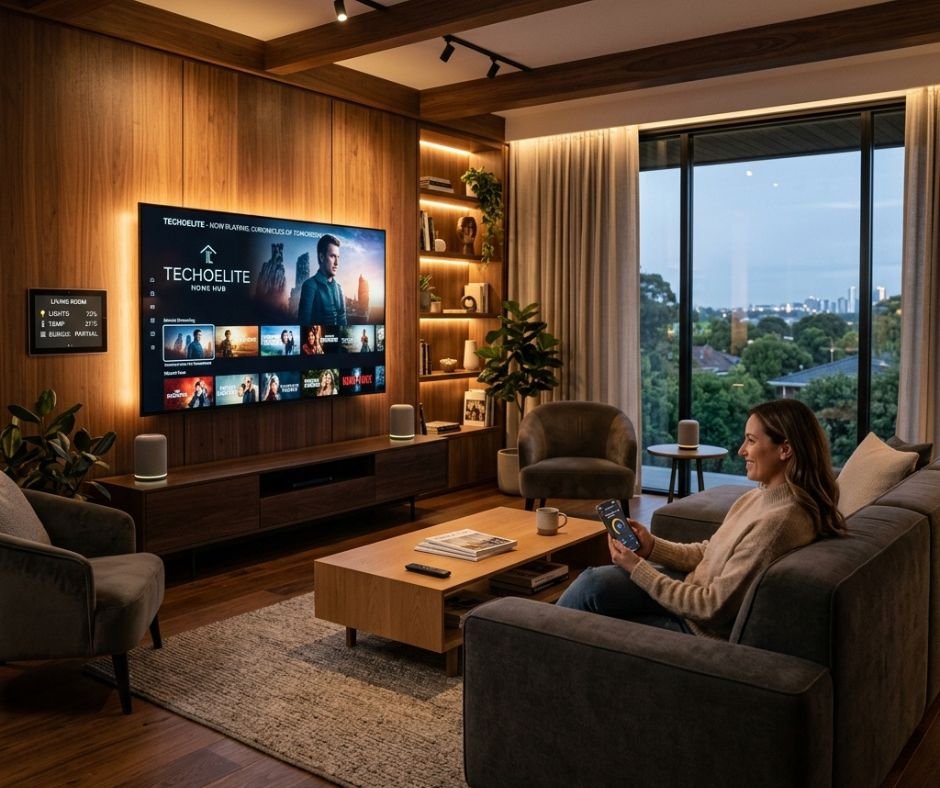

Smart homes are changing how people manage everyday living. From controlling lights with a smartphone to monitoring security cameras remotely, connected technology can make ordinary household tasks more convenient. Smart Home TechoElite offers a useful way to explore this growing technology, including automation, connected devices, security, artificial intelligence, energy management, and emerging developments.
Whether you are planning your first smart home setup or upgrading an existing system, understanding how these technologies work can help you make better decisions. This guide covers essential smart home devices, automation ideas, privacy considerations, installation requirements, common problems, costs, and smart home technology 2026 trends. It also explains how to build a practical connected environment without making your home unnecessarily complicated.
What Is Smart Home TechoElite and How Does Smart Home Technology Work?
Smart Home TechoElite refers to the broader concept of using connected technology to make a home more automated, responsive, secure, and convenient. Instead of operating household equipment independently, you can connect compatible devices through a network and control them through apps, voice commands, sensors, schedules, or automated routines.
A typical connected home might include smart lights, thermostats, cameras, locks, plugs, appliances, and motion sensors. These devices can communicate with each other or with a central platform. For example, a motion sensor could detect movement and trigger a light automatically. A smart thermostat could adjust temperature settings according to a schedule. A security camera could send a notification when it detects activity.
The technology behind an IoT smart home usually involves wireless communication, software, sensors, and cloud or local processing. Wi-Fi is common, while Bluetooth and other wireless technologies can also connect devices. Some systems use a smart home hub to coordinate equipment and provide centralized control.
The important point is that “smart” does not simply mean internet-connected. A genuinely useful system should solve practical problems. Automation should reduce repetitive work, improve awareness, or provide more convenient control.
Smart Home Devices and Features to Know
The modern smart home includes a wide range of smart home devices, but you do not need every available product. The best setup depends on your goals, property, budget, network, and existing equipment. Start with the areas where automation can make a noticeable difference.
Smart lighting is one of the easiest entry points. Connected bulbs and switches can support schedules, dimming, remote control, and motion-based automation. You can program hallway lights to activate at night or turn selected lights off automatically when everyone leaves.
Smart thermostats provide another practical application. They can support scheduling, remote adjustment, occupancy-related features, and energy monitoring. ENERGY STAR explains that certified smart thermostats can provide features such as remote control, scheduling, geofencing, and energy-use information.
Security equipment is another major category. Smart cameras, video doorbells, sensors, alarms, and smart door locks can provide remote visibility and notifications. Meanwhile, smart plugs can add basic automation to compatible conventional appliances.
Compatibility deserves particular attention. Not every device works with every platform. Before buying, check supported ecosystems, wireless requirements, mobile applications, hub requirements, and automation capabilities. A cheaper device may become expensive if you later need to replace it because it does not integrate with your preferred system.
How Smart Home Automation Makes Everyday Life Easier
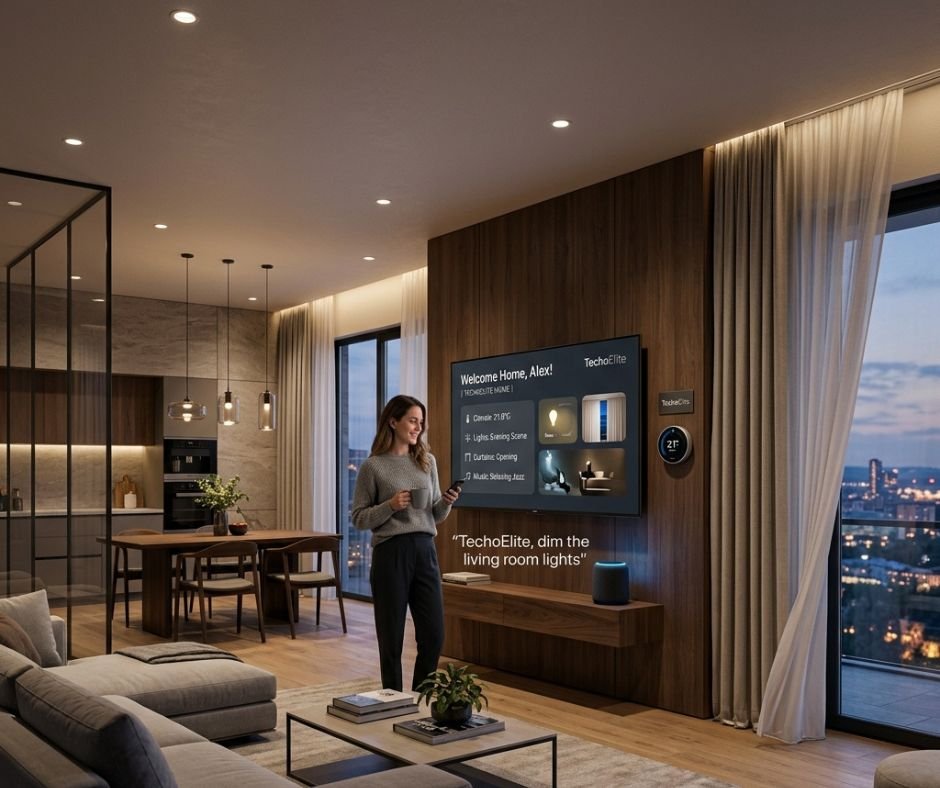
The real value of smart home automation comes from reducing repetitive tasks. Instead of opening separate applications or manually controlling several devices, you can create routines that respond to schedules, sensors, occupancy, or other triggers.
For example, an evening routine could activate selected lights, adjust the thermostat, and enable particular security settings. A morning routine could gradually activate lighting and restore comfortable temperature settings. These small automations can make a home feel more responsive without requiring constant interaction.
Automated lighting is especially useful because it can respond to time and movement. You could configure a hallway light to activate when motion is detected after sunset and switch off after several minutes. Similar rules can control outdoor lighting or other compatible equipment.
Remote access provides another layer of convenience. Smartphone home control allows you to check devices while away from home. You might turn off a forgotten light, adjust your thermostat, check a camera, or receive an alert about an unexpected event.
However, automation should remain simple enough to understand. Overly complicated rules can create unexpected behavior. Start with a few reliable routines, test them, and expand gradually.
AI and Voice Control in Smart Homes
Artificial intelligence is becoming increasingly relevant to the smart home. Traditional automation usually follows predefined rules, while AI-powered home automation can interpret information and potentially provide more adaptive interactions.
For example, AI can help systems understand natural-language requests, analyze information from sensors, summarize security events, or personalize certain household routines. Instead of controlling every device separately, conversational interfaces may allow you to interact with your home in a more natural way.
Voice assistants already provide hands-free control for many compatible products. You can use voice-controlled devices to operate lights, thermostats, entertainment equipment, and other supported technologies. This can be particularly convenient when your hands are occupied.
AI also introduces additional considerations. Some intelligent services depend on cloud processing, microphones, cameras, or extensive user data. Therefore, convenience should be balanced with privacy.
Before enabling an advanced AI feature, check what information the service collects and how that information is processed. Also review account permissions and available privacy controls.
AI is useful, but it is not mandatory. Simple schedules and sensor-based rules can provide substantial benefits without artificial intelligence.
Smart Home Security, Privacy and Data Protection
A connected home creates new security considerations because devices communicate through networks and may collect personal information. Smart security systems can improve visibility, but they also need appropriate protection.
Security cameras, doorbells, locks, sensors, and alarms can work together to create automated home security. For instance, a door sensor could trigger a notification when an entry point opens unexpectedly. A camera could provide visual information about activity around the entrance.
However, connected security should supplement rather than completely replace conventional safeguards. Physical locks, suitable lighting, and other traditional security measures still have an important role.
Account security is equally important. Use strong and unique passwords, enable multi-factor authentication when available, and keep devices updated. Your router should also use a strong password and current security settings.
The U.S. Cybersecurity and Infrastructure Security Agency discusses security considerations associated with Internet of Things devices because connected equipment can create vulnerabilities affecting digital and physical environments.
Privacy deserves similar attention. Cameras, microphones, thermostats, and other connected devices can generate sensitive information. Before purchasing a device, review its privacy policy, storage practices, data controls, and account requirements.
Where possible, choose products that offer clear security settings and a reasonable update policy. You should also remove unused devices from your network and accounts.
Energy Efficiency and Cost Savings With Smart Home Technology
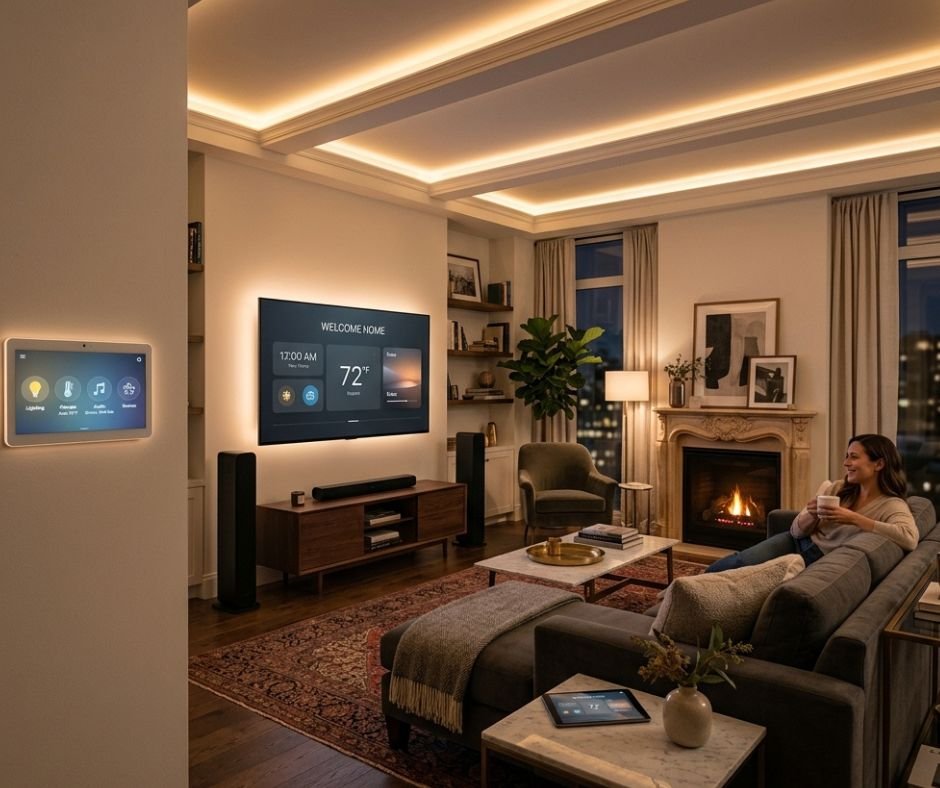
Smart technology can support smart energy management, but connected devices do not automatically reduce energy bills. Savings depend on how equipment operates, how you configure it, household behavior, and local conditions.
Smart thermostats are a useful example. Automated schedules can reduce unnecessary heating or cooling when your home is empty. Remote control can also allow you to adjust settings without leaving equipment running at an unsuitable level.
Energy monitoring can provide another benefit. Some systems offer energy consumption tracking, helping you understand when electricity usage changes. This information becomes more useful when you use it to modify schedules or operating habits.
ENERGY STAR also describes smart home energy-management systems as technologies that can combine connected equipment, scheduling, usage information, and automation.
Costs vary considerably. A simple setup might begin with a few lights or plugs, while a comprehensive system can involve cameras, locks, thermostats, sensors, hubs, network upgrades, and professional installation.
There are also limitations. Internet dependency, compatibility problems, battery replacement, software updates, cloud-service changes, and discontinued products can affect long-term reliability. Therefore, consider the complete ownership experience rather than the purchase price alone.
How to Build and Set Up a Smart Home With TechoElite
A successful smart home installation begins with planning. First, decide what you want your technology to accomplish. Security, energy efficiency, convenience, accessibility, and entertainment are common starting points.
Next, evaluate your existing home. Check Wi-Fi coverage, electrical outlets, lighting, heating and cooling equipment, door hardware, and current appliances. This assessment can prevent compatibility problems later.
Choose an ecosystem that supports your existing devices and future plans. Pay attention to smart home compatibility, supported platforms, network requirements, privacy controls, and update policies.
Install devices gradually. Connect one product, update its software, secure the associated account, and test basic operation before adding another. This approach makes it much easier to identify problems.
For electrical work, complex HVAC installations, or other tasks involving potentially hazardous systems, use a suitably qualified professional. Not every smart device should be treated as a simple DIY installation.
Once devices work individually, create automation routines. Start with straightforward rules such as:
Motion detected after sunset → hallway light turns on → light turns off after a set period.
Test every automation under different conditions. Also maintain a manual control option wherever practical. Smart technology should remain useful even when an automation fails.
Benefits and Practical Uses of Smart Home Technology
The main benefit of an intelligent home is better control over everyday tasks. Instead of adding technology for its own sake, you can use automation to make your home more convenient, comfortable, secure, and efficient.
Convenience is the most obvious benefit. Remote control, scheduled lighting, automated temperature management, and connected appliances can remove small repetitive tasks from your daily routine.
Smart technology can also support accessibility. Voice control, automated lights, smart locks, and remote controls may help people who find conventional switches or controls difficult to operate.
Security monitoring offers another practical application. Home monitoring systems can send alerts about motion, doors, cameras, leaks, or other events. However, excessive notifications can become distracting. Configure alerts carefully so important events remain noticeable.
Energy management can also benefit from automation. Connected thermostats and equipment can respond to schedules or occupancy, while monitoring tools can provide useful information about consumption.
One common mistake is purchasing too many devices at once. Another is ignoring compatibility. A third is failing to secure accounts after installation.
A better approach is to build slowly. Choose a few reliable products, learn how they work, and expand only when a new device solves a genuine problem.
Common Smart Home Challenges and How to Solve Them
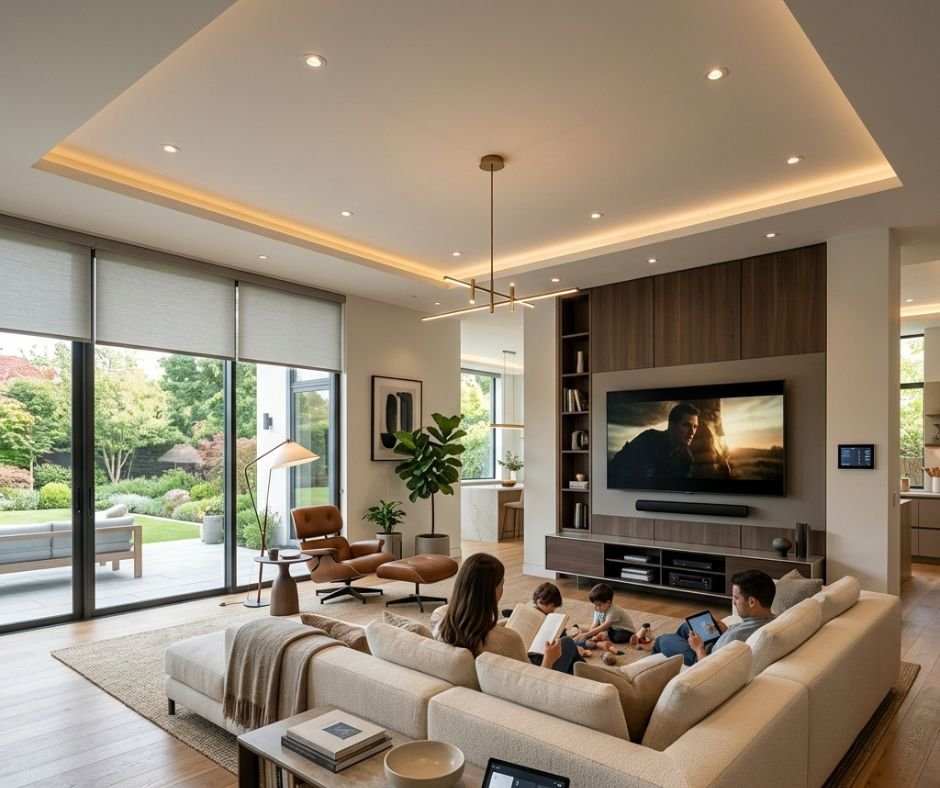
Connectivity is among the most common smart home problems. A device may disconnect because of weak Wi-Fi coverage, interference, configuration issues, or power interruptions.
Start by checking whether the device has power and whether other devices on the network work normally. If only one product is affected, restart it and check its application. If several devices disconnect, investigate your network rather than resetting every device.
Some devices may appear connected but fail to respond. Check account permissions, firmware, automation rules, and platform status. A simple restart can sometimes restore communication.
Voice-control problems may have different causes. Confirm that the correct account is connected, the device has the correct name, and the relevant integration remains active. Avoid giving several devices similar names because voice assistants can misinterpret them.
Firmware updates can also affect behavior. Keep supported equipment updated because manufacturers often use updates to address security or reliability issues.
If a device repeatedly fails, check whether the manufacturer still supports it. A discontinued product may not justify endless troubleshooting. Replacing unsupported equipment can sometimes be more practical than continuing to repair an obsolete system.
Smart Home TechoElite: Latest Trends and Future Developments in 2026
The direction of smart home technology 2026 is increasingly focused on interoperability, artificial intelligence, energy management, security, and simpler user experiences.
One important development is the continued emphasis on cross-platform compatibility. Standards such as Matter aim to improve interoperability among supported smart home products and ecosystems. However, you should still verify individual product support because features can vary between platforms.
AI is another major area of development. Modern systems are moving beyond basic commands toward contextual interactions, intelligent recommendations, and more personalized automation. Instead of simply reacting to one command, future systems may combine information from multiple devices to provide more useful responses.
Energy management is also becoming more important. Connected thermostats, appliances, lighting, and monitoring equipment can potentially work together to provide better visibility and automated control.
Security will remain critical as homes become increasingly connected. More devices mean more accounts, software, data, and network connections that need protection.
The future of home automation is therefore not necessarily about adding hundreds of gadgets. It is about creating systems that communicate effectively and perform useful tasks with minimal effort.
Frequently Asked Questions
What is Smart Home TechoElite?
Smart Home TechoElite refers to the broader smart-home concept involving connected devices, automation, security, AI, energy management, and intelligent home control.
What devices are needed for a smart home?
Common options include smart lights, thermostats, sensors, cameras, locks, plugs, appliances, and compatible control platforms. You only need devices that address your specific needs.
Does a smart home require Wi-Fi?
Many devices use Wi-Fi, but other technologies such as Bluetooth and different wireless protocols can also be used. Requirements depend on the equipment.
Can smart home technology save energy?
It can help reduce unnecessary energy use through scheduling, monitoring, automation, and intelligent climate control. Actual savings depend on equipment and user behavior.
Are smart home devices safe?
Connected devices require appropriate security. Strong passwords, multi-factor authentication, software updates, secure networking, and careful privacy settings can reduce common risks.
Conclusion
Smart Home TechoElite provides a useful framework for understanding how modern connected homes can work together. The technology now extends far beyond smart bulbs and voice commands. It includes automation, security systems, energy management, AI, sensors, connected appliances, and remote control.
The most effective approach is to begin with a real household need. Choose compatible devices, secure your accounts, maintain your network, and build automation gradually. Pay attention to privacy and long-term support before committing to an ecosystem.
Smart home technology should simplify your environment rather than make it harder to manage. When devices work together reliably, automation can save time, improve awareness, support energy management, and create a more convenient connected living experience.

Welcome to DishVanta! I’m Jhone, a passionate content writer with 1 years of experience in SEO, digital content, and website growth. I create engaging, search-friendly content that helps websites attract more visitors and build a stronger online presence. My aim is to make SEO, content creation, and web design simple, practical, and effective. Let’s work together to create better content, grow your audience, and achieve lasting online success!