
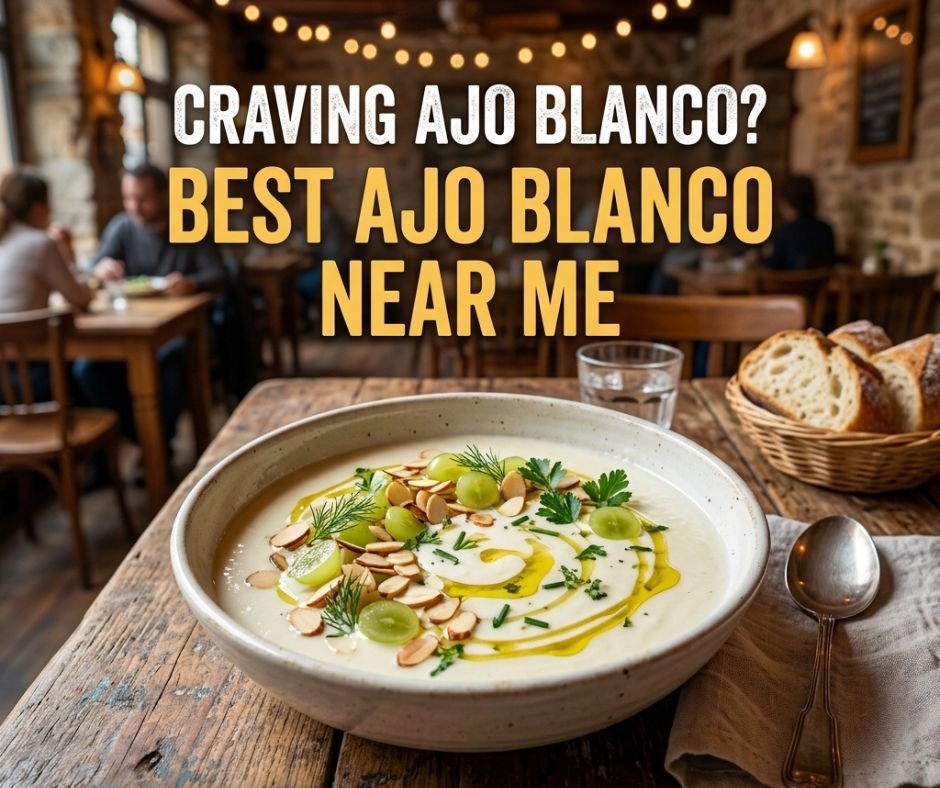

If you’re craving something cool, creamy, and completely different from the usual soup menu, you’re probably searching for the best ajo blanco near me for a good reason. This chilled Spanish classic has quietly become one of the most requested dishes on tapas menus across the USA, and once you taste it, you’ll understand why.
Finding an authentic version, though, takes a bit more effort than typing a search query and hoping for the best. This guide walks you through exactly what ajo blanco is, how to spot the real deal, and where you’re most likely to find it near you in 2026.
What Is Ajo Blanco? A Quick Introduction to Spain’s Cold Almond Soup
Ajo Blanco, sometimes spelled Ajoblanco, is a traditional Spanish cold soup made primarily from fresh almonds, garlic, bread, olive oil, and vinegar. Unlike tomato-based gazpacho, this dish skips the tomatoes entirely and leans on the natural creaminess of blended almonds to create a silky, pale texture. It’s served ice-cold, usually as a starter, and it delivers a flavor that’s nutty, garlicky, and refreshingly tangy all at once.
The dish has roots that predate gazpacho by centuries, and many food historians consider it one of the oldest cold soups in Spanish cuisine. It’s a staple of Andalusian soup traditions, particularly in the southern regions where hot summers call for something light and cooling. Whether you’re new to Spanish food or already a fan of gazpacho, ajo blanco offers a completely different flavor experience worth seeking out.
The Origins of Ajo Blanco in Andalusia
Ajo blanco traces back to Andalusia in southern Spain, with Málaga Ajo Blanco widely regarded as one of the most authentic regional versions. Historians believe the recipe has Moorish influences, since almonds and garlic were staple ingredients long before tomatoes arrived in Spain from the Americas. This makes ajo blanco a genuinely ancient dish, predating what most people think of as “classic” Spanish cold soup. Restaurants that honor this traditional Andalusian recipe typically stick to a short, simple ingredient list rather than adding modern shortcuts.
Why Ajo Blanco Is Gaining Popularity in the USA
American diners have grown increasingly curious about regional Spanish dishes that go beyond paella and sangria, and ajo blanco fits that curiosity perfectly. As Spanish restaurants near me searches have climbed, more chefs are adding this dish to seasonal summer menus, especially in cities with strong tapas and wine bar cultures. It also appeals to health-conscious diners since it’s naturally dairy-free and plant-based. As a result, you’ll now find it popping up not just at Spanish restaurants, but occasionally at farm-to-table spots that value seasonal, ingredient-driven cooking.
What Does Authentic Ajo Blanco Taste Like?
If you’ve never tried it, imagine a smoother, nuttier cousin of gazpacho with a sharper garlic kick. The almond garlic soup base creates a rich, velvety mouthfeel, while a splash of sherry vinegar cuts through the richness with acidity. Good ajo blanco should taste balanced, not overwhelmingly garlicky or overly sweet, and the almond flavor should come through clearly rather than getting lost.
Traditional Ingredients That Define Its Flavor
The classic recipe relies on just a handful of components, and each one plays a specific role in the final taste.
| Ingredient | Role in the Dish |
| Fresh almonds | Provides the creamy base and nutty flavor |
| Garlic | Adds sharpness and depth |
| Stale bread | Thickens the soup and balances texture |
| Extra virgin olive oil | Adds richness and a smooth finish |
| Sherry vinegar | Brings acidity and brightness |
| Cold water | Adjusts consistency |
| Salt | Enhances every other flavor |
Some chefs also add a touch of Muscat grapes or Spanish melon as a garnish, which introduces a subtle sweetness that plays beautifully against the garlic.
How to Find the Best Ajo Blanco Near Me
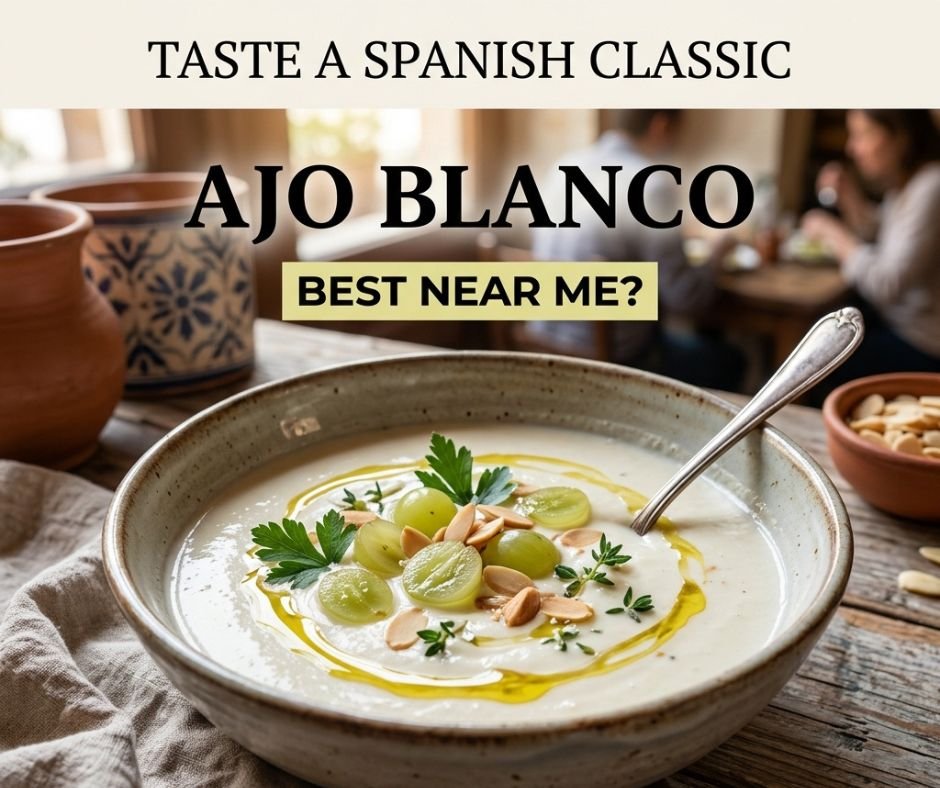
Finding genuinely good ajo blanco takes a slightly different approach than searching for a burger joint, mainly because it’s a seasonal, niche dish rather than something every restaurant carries. Knowing where and how to look will save you a lot of wasted searches.
Using Google Maps, Yelp, and Restaurant Apps Effectively
Start with Google Maps and Yelp, but don’t just search “Spanish food.” Instead, search specifically for tapas bars, Spanish restaurants, or Basque and Andalusian cuisine in your area, then check individual menus for ajo blanco by name. Many restaurants don’t list every dish in their Google Business profile, so calling ahead or checking their website directly often works better than relying on map pins alone. Restaurant discovery platforms like Yelp also let you filter by cuisine type, which narrows your results considerably compared to a generic web search.
Search Terms That Return Better Local Results
Certain search phrases pull more accurate, localized results than others. Try combinations like “ajo blanco [your city],” “Spanish tapas menu ajo blanco,” or “authentic Andalusian soup near me” instead of just the broad focus keyword. Adding your neighborhood or city name to the search consistently improves relevance, especially in larger metro areas where dozens of Spanish restaurants might otherwise get lumped together.
What Makes the Best Ajo Blanco Restaurant Stand Out
Not every restaurant claiming to serve “Spanish soup” gets ajo blanco right, so it helps to know what separates an excellent version from a mediocre one. The best restaurants use fresh almonds rather than almond flour or pre-made almond milk, and they blend the soup to a genuinely smooth, lump-free consistency. You should also expect a kitchen that treats this as a seasonal specialty rather than a year-round filler item, since that usually signals genuine care in sourcing ingredients.
Signs of Authentic Preparation vs. a Shortcut Version
A shortcut version often tastes flat, overly thick, or artificially sweet, and it may rely on almond butter or bottled vinegar instead of fresh components. Authentic fresh ajo blanco has a natural, slightly grainy texture from real almonds, a bright acidity from proper sherry vinegar, and a garnish that feels intentional rather than tossed on as an afterthought. If a menu describes it simply as “white gazpacho” without any regional context, that’s not necessarily a red flag, but it’s worth asking your server how the kitchen prepares it.
Best Places to Find Ajo Blanco Near You in the USA
Ajo blanco isn’t as widely available as classic gazpacho, but it does show up reliably in specific types of establishments across the country. Knowing where to focus your search saves you time and increases your odds of finding an authentic bowl.
Spanish Restaurants and Tapas Bars
Dedicated Ajo Blanco restaurants, meaning Spanish-focused tapas bars and fine dining spots, remain your best bet. Cities with strong culinary diversity, such as New York, Chicago, Miami, San Francisco, and Los Angeles, tend to have multiple options serving this dish, particularly during summer months. Smaller cities may have just one or two authentic Spanish restaurants, so it’s worth checking their seasonal or specials menu directly rather than assuming it’s a permanent fixture.
Farmers Markets, Specialty Grocers, and Pop-Up Vendors
Beyond sit-down restaurants, keep an eye on farmers markets and specialty food vendors, especially ones run by Spanish or Mediterranean food enthusiasts. Some gourmet grocers now sell chilled, ready-to-eat versions in refrigerated sections, and pop-up food vendors at cultural festivals occasionally feature it as a seasonal specialty. These options work well if you want to try ajo blanco without committing to a full restaurant meal.
Ajo Blanco Menu Prices, Portion Sizes, and Serving Options
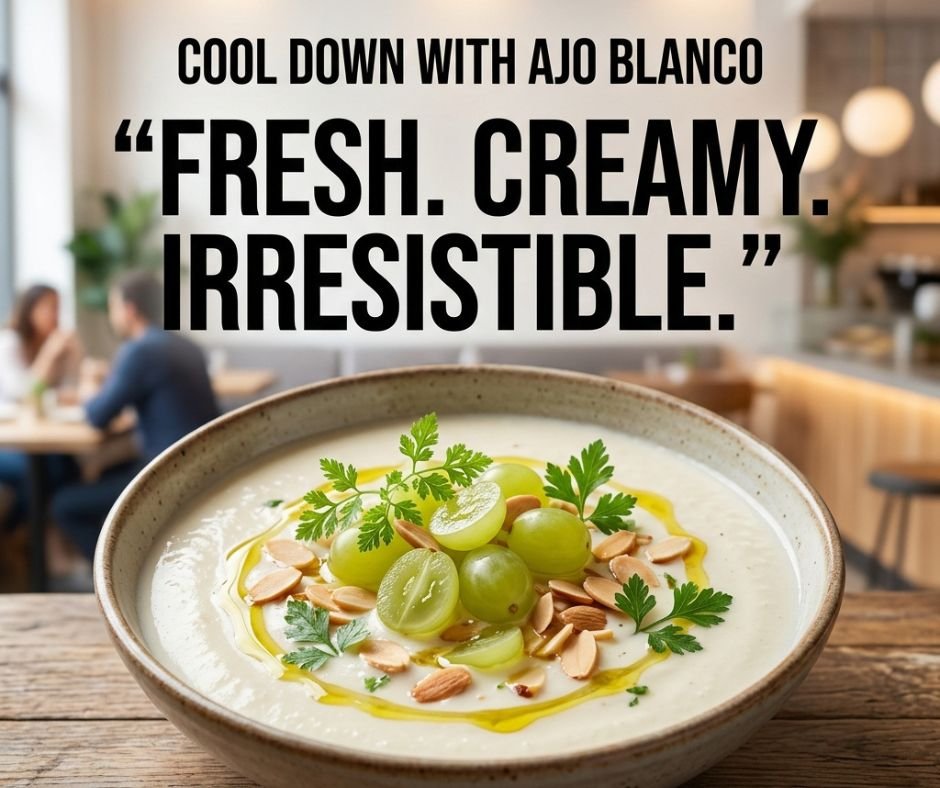
Pricing for ajo blanco varies depending on the restaurant type, portion size, and region, but you can generally expect it to fall within a predictable range for a tapas-style starter. At most Spanish restaurants, a single serving typically costs between $8 and $16, with upscale or fine dining establishments sometimes charging more due to premium almond sourcing or elaborate garnishes.
Portion sizes usually come in small tapas bowls meant for sharing or sampling, though some restaurants offer a larger “soup course” size for diners who want it as a main starter. Menu descriptions often specify the toppings included, such as grapes, melon, or a drizzle of olive oil, so it’s worth reading closely since these garnishes can affect both flavor and price.
Dine-In, Takeaway, or Delivery: Which Option Is Best for Ajo Blanco?
Dining in remains the best way to experience ajo blanco properly, since the dish needs to arrive genuinely cold and freshly blended to taste its best. Restaurants that plate it in-house can control temperature and texture right up until the moment it reaches your table, which matters more with a chilled soup than with most hot dishes.
That said, takeaway and delivery aren’t off the table if dining in isn’t practical for you. If you order for takeout, ask the restaurant to pack it with extra ice or keep it refrigerated until pickup, since ajo blanco can lose its refreshing quality if it sits at room temperature too long. Delivery works best over shorter distances and with insulated packaging, so check reviews or ask the restaurant directly about how they handle cold dishes for delivery orders before committing.
Best Ajo Blanco Toppings, Pairings, and Regional Variations
Traditional ajo blanco doesn’t need much dressing up, but the right toppings and pairings can genuinely elevate the experience. Ajo Blanco with grapes remains the most classic and widely recognized variation, offering a sweet contrast to the garlicky base. Some regions swap grapes for Ajo Blanco with melon, particularly in warmer months when Spanish melon is at its peak.
Traditional Toppings (Grapes, Almonds, Olive Oil)
The most authentic garnishes stay simple: halved Muscat grapes, a scattering of toasted almond slices, and a generous drizzle of high-quality extra virgin olive oil. Some chefs finish the bowl with a few flakes of sea salt or a light dusting of smoked paprika for a subtle contrast. These toppings aren’t just decorative, since they add texture and layered flavor that balance the smoothness of the soup itself.
What to Pair With Ajo Blanco (Wine and Tapas)
A crisp, dry white wine such as Albariño or a chilled Fino sherry pairs beautifully with ajo blanco, echoing the soup’s acidity while cutting through its richness. On the food side, pairing it with light tapas like jamón, marinated olives, or grilled shrimp creates a well-rounded small-plates meal without overwhelming the delicate almond flavor.
Common Mistakes to Avoid When Ordering or Judging Ajo Blanco
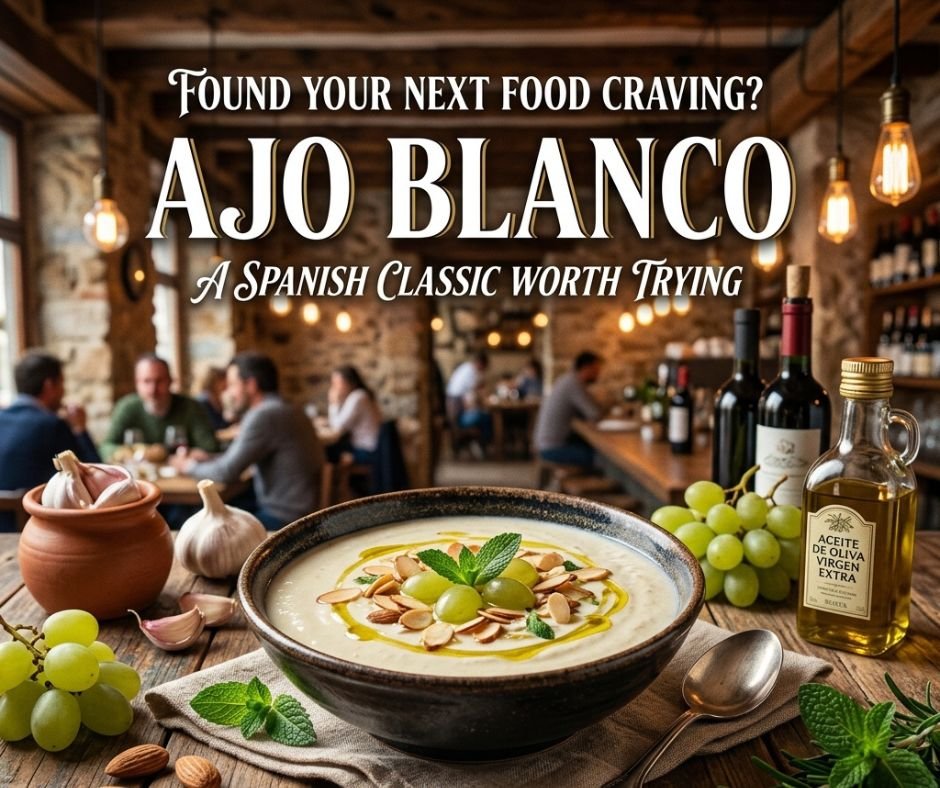
Even experienced diners sometimes misjudge ajo blanco simply because their expectations don’t match the dish’s actual character. Avoiding a few common mistakes will help you appreciate it properly and choose better restaurants going forward.
- Expecting it to taste like gazpacho. Ajo blanco has no tomato base, so comparing the two directly sets you up for disappointment rather than appreciation.
- Assuming thicker automatically means more authentic. A properly balanced ajo blanco should be smooth and pourable, not paste-like.
- Overlooking the garlic intensity. This dish is meant to have a noticeable garlic presence, so don’t mistake that sharpness for a kitchen mistake.
- Skipping the toppings. Grapes, almonds, and olive oil aren’t optional extras. They’re part of the traditional flavor profile.
- Ordering it outside its season. Restaurants serving it in the dead of winter may be using shortcuts rather than fresh, seasonal almonds.
Ajo Blanco and Dietary Considerations (Vegan, Gluten-Free, Nut Allergies)
Ajo blanco is naturally vegan in its traditional form, since it contains no dairy, eggs, or animal products, relying instead on almonds and olive oil for richness. This makes it a solid option if you’re dining with vegan guests or simply looking for a satisfying plant-based starter.
However, two dietary factors deserve close attention. First, traditional recipes use bread as a thickener, so gluten-free diners should always ask whether the kitchen uses bread or a gluten-free substitute like rice or extra almonds. Second, and most importantly, ajo blanco is fundamentally a nut-based soup, which makes it unsuitable for anyone with almond or tree nut allergies. If you have any nut allergy, it’s best to avoid this dish entirely rather than asking a kitchen to “leave out” the almonds, since the almonds are the core ingredient rather than a garnish.
FAQs About Finding the Best Ajo Blanco Near Me
What is ajo blanco?
Ajo blanco is a traditional Spanish cold soup made from blended almonds, garlic, bread, olive oil, and vinegar, originating in the Andalusia region of southern Spain.
Where can I find authentic ajo blanco near me?
Your best options are Spanish restaurants, tapas bars, and occasionally specialty grocers or farmers markets, particularly in cities with a strong Spanish or Mediterranean food scene.
Is ajo blanco served hot or cold?
Ajo blanco is always served cold, typically chilled in the refrigerator for several hours before serving to enhance its refreshing quality.
What ingredients are traditionally used in ajo blanco?
The core ingredients include fresh almonds, garlic, stale bread, extra virgin olive oil, sherry vinegar, cold water, and salt, often garnished with grapes or melon.
Is ajo blanco similar to gazpacho?
Both are Spanish cold soups, but ajo blanco uses almonds instead of tomatoes as its base, giving it a nuttier, creamier flavor compared to gazpacho’s tangy tomato profile.
Final Thoughts on Finding the Best Ajo Blanco Near You
Tracking down genuinely authentic ajo blanco takes a little more effort than searching for your average soup special, but the payoff is worth it. Focus your search on dedicated Spanish restaurants and tapas bars, ask questions about how the kitchen prepares it, and don’t be afraid to try it with traditional toppings like grapes or melon before deciding you don’t like it. Whether you find it at a neighborhood tapas bar or end up making it yourself at home, this chilled almond soup offers a genuinely unique addition to your Spanish food repertoire, one that’s well worth seeking out this season.

Welcome to DishVanta! I’m Jhone, a passionate content writer with 1 years of experience in SEO, digital content, and website growth. I create engaging, search-friendly content that helps websites attract more visitors and build a stronger online presence. My aim is to make SEO, content creation, and web design simple, practical, and effective. Let’s work together to create better content, grow your audience, and achieve lasting online success!