
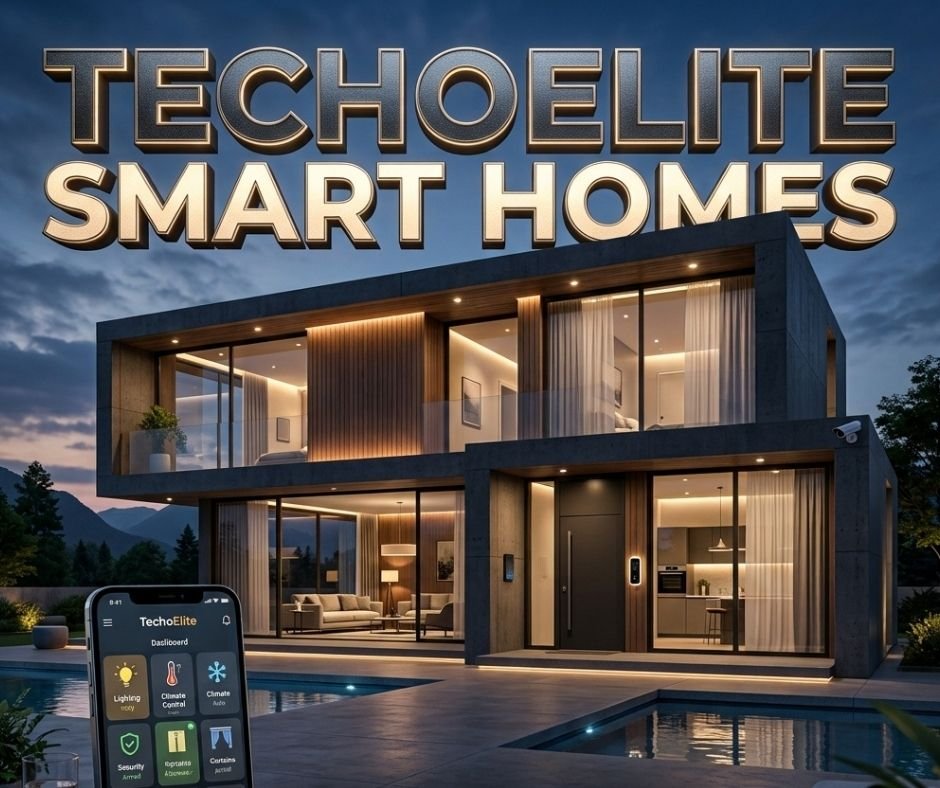

Walking into a home that already knows what you need feels like something out of a movie. The lights adjust to your mood, the thermostat has already warmed the living room, and your front door locked itself the moment you left for work. This is the everyday reality behind TechoElite smart homes, and it’s becoming far more accessible than most homeowners realize.
If you’ve been curious about upgrading your living space but feel overwhelmed by the sheer number of gadgets, apps, and buzzwords, you’re not alone. This guide breaks down exactly what a TechoElite smart home setup involves, how the technology actually works, what it costs, and where the industry is headed next. By the end, you’ll have a clear, practical understanding of whether this kind of home automation fits your lifestyle.
What Is a TechoElite Smart Home?
A TechoElite smart home refers to a residence where everyday systems, lighting, security, climate, entertainment, and appliances, are connected through a shared network and controlled from a single point. Instead of manually flipping switches or adjusting dials, you manage your entire living space through an app, a voice command, or automated schedules that run in the background without you lifting a finger.
The idea isn’t new, but the execution has matured significantly. Early home automation required complex wiring and expensive proprietary systems. Today’s smart home ecosystem relies on wireless connectivity, affordable sensors, and cloud platforms that talk to each other more smoothly than ever. That shift is exactly what makes TechoElite-style automation practical for the average household rather than a luxury reserved for tech enthusiasts.
How TechoElite Smart Home Technology Works
At its core, TechoElite smart home technology depends on a network of connected devices that share data and respond to triggers in real time. A motion sensor detects movement, sends a signal to your hub, and that hub tells your lights to turn on. Multiply that basic loop across dozens of devices, and you get a home that reacts intelligently to your habits rather than sitting passively until you intervene.
None of this works without a reliable backbone connecting every device, which is why understanding the underlying infrastructure matters before you buy anything.
The Role of Wi-Fi, Hubs, and Sensors
Your home network is the foundation of the entire system. Most connected home devices communicate over Wi-Fi, though many higher-end setups also use protocols like Zigbee or Z-Wave, which use less power and create a more stable mesh network for intelligent sensors. A central hub acts as the translator, allowing devices from different brands to understand each other even when they weren’t originally designed to. Without this centralized home control point, you’d end up juggling a dozen separate apps instead of one unified system.
Voice Assistants and App-Based Control
Voice assistant integration has become the most natural way people interact with their smart homes. Saying “dim the lights” or “lock the front door” feels more intuitive than reaching for your phone every time. That said, mobile app control still matters, especially for detailed scheduling, camera footage review, or fine-tuning settings that voice commands can’t handle as precisely. Most households end up using both, leaning on voice for quick actions and the app for anything that requires more control.
Core Features of TechoElite Smart Homes
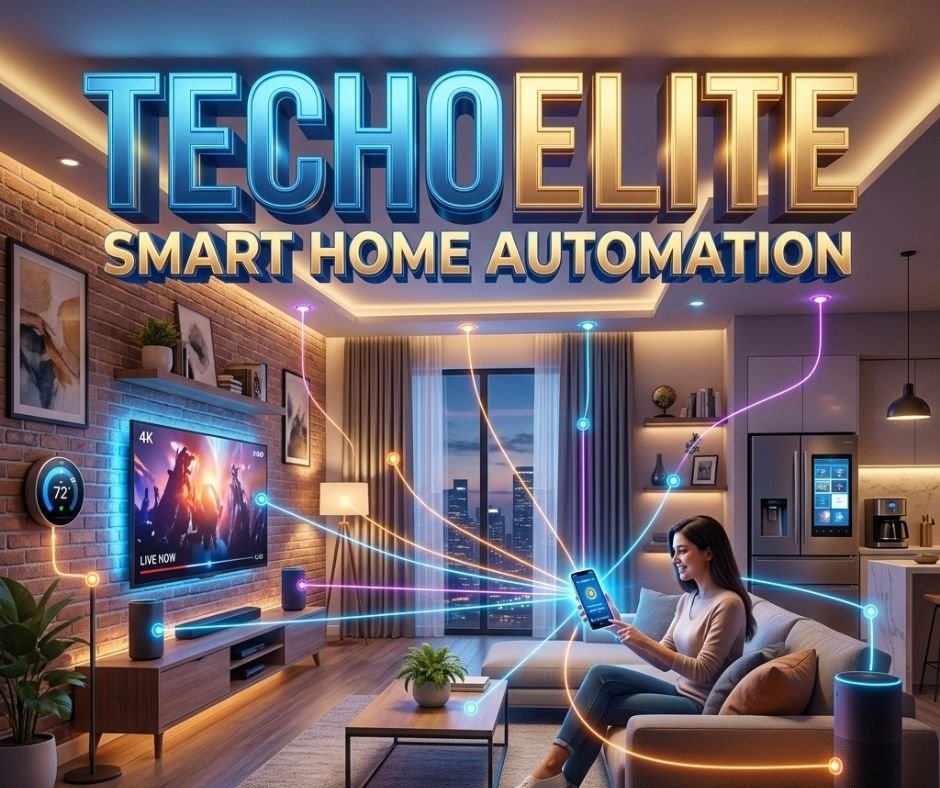
The real value of a TechoElite smart home shows up in the features you interact with daily, not the technical architecture behind the scenes. Smart lighting lets you set schedules, adjust brightness, and even change color temperature to match the time of day. Smart thermostats learn your routine over a few weeks and start adjusting temperatures before you even ask, which quietly reduces both discomfort and wasted energy.
Beyond climate and lighting, home security systems now include features like package detection, facial recognition for known visitors, and instant alerts the moment something unusual happens. Smart appliances, from refrigerators that track expiration dates to washing machines you can start remotely, round out a system that touches nearly every part of daily life. Together, these features create a home that feels less like a collection of gadgets and more like one cohesive, responsive environment.
Popular TechoElite Smart Home Devices and Systems
Choosing the right devices can feel overwhelming, so it helps to think in categories rather than trying to research every product individually. Here’s a practical breakdown of the device types most homeowners start with:
| Category | Common Devices | Primary Benefit |
| Lighting | Smart bulbs, dimmer switches, light strips | Convenience and ambiance |
| Climate | Smart thermostats, vent controllers | Energy savings |
| Security | Video doorbells, smart locks, motion sensors | Home safety |
| Entertainment | Smart speakers, streaming hubs | Voice-controlled media |
| Appliances | Smart plugs, robot vacuums, connected ovens | Time savings |
| Monitoring | Water leak sensors, air quality monitors | Preventive protection |
Most people don’t automate everything at once. Instead, they start with one category, usually lighting or security, and expand as they see real value, which keeps costs manageable and avoids the frustration of managing too many new systems simultaneously.
Key Benefits of Switching to a TechoElite Smart Home
Smart home adoption isn’t just about novelty anymore. Homeowners across the USA are choosing residential automation because it solves genuine, everyday problems, from wasted energy to safety concerns for aging family members.
Convenience and Time Savings
Automation removes small daily frictions that add up over time. Instead of manually checking whether you locked the door or turned off the oven, real-time notifications confirm everything instantly from wherever you are. This kind of smart home convenience doesn’t just save minutes; it removes the mental load of remembering dozens of small tasks every single day.
Energy Efficiency and Lower Utility Bills
Energy-efficient homes benefit enormously from automated climate and lighting control. A smart thermostat that adjusts based on occupancy can meaningfully reduce heating and cooling costs, since it stops conditioning empty rooms. Combined with energy monitoring tools that show exactly where electricity is being used, many households find it easier to cut waste they didn’t even know existed.
Safety for Families and Older Adults
For families with young children or aging parents, home safety features offer real peace of mind. Motion-activated lighting reduces fall risks at night, while automated home security systems can alert family members the moment an unusual event occurs. Voice-controlled devices also make daily tasks easier for anyone with limited mobility, letting them manage their environment without needing to reach switches or panels.
TechoElite Smart Home Security and Data Privacy
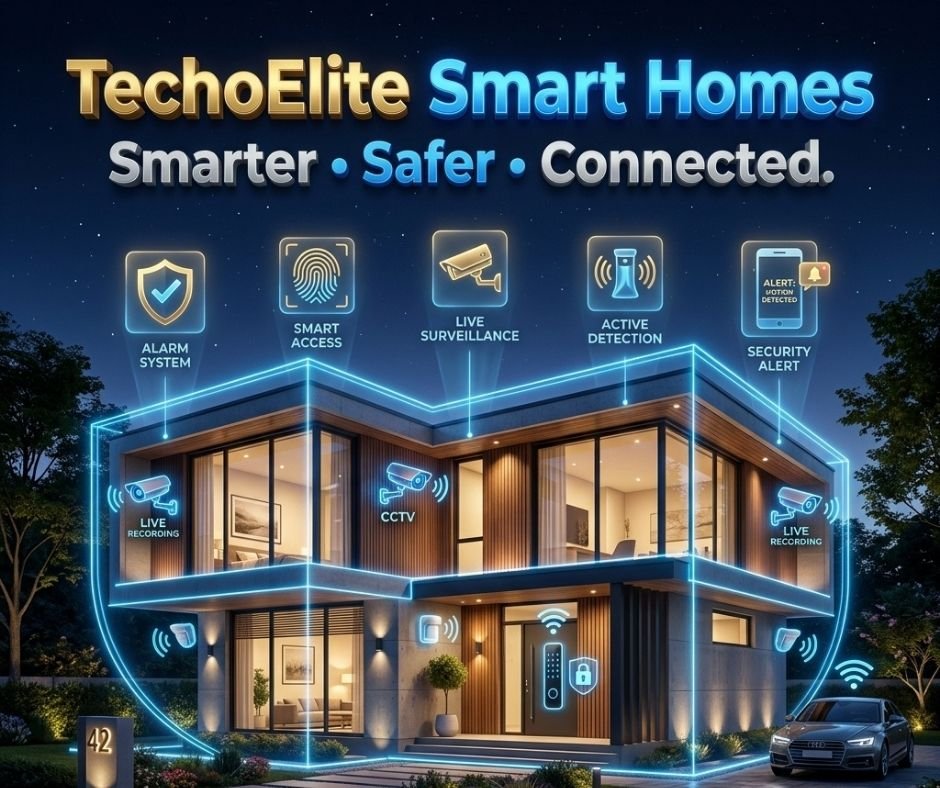
Security works two ways in a smart home: protecting your physical property and protecting your digital information. Cameras, smart locks, and sensors clearly strengthen physical security, but every connected device is also a potential entry point for hackers if it isn’t properly secured. That’s why cybersecurity deserves just as much attention as the locks on your front door.
Practical steps make a real difference here. Use strong, unique passwords for your hub and router, enable two-factor authentication wherever it’s offered, and keep device firmware updated regularly. Data privacy concerns are also worth taking seriously since many devices collect usage data; reviewing each manufacturer’s privacy policy before purchase helps you understand exactly what’s being collected and shared. For additional guidance on securing connected devices, the Federal Trade Commission’s IoT security resources offer helpful, up-to-date recommendations for consumers.
How to Set Up a TechoElite Smart Home Step by Step
Getting started doesn’t require an electrician or a massive upfront investment. Follow these steps to build your system in a logical, manageable order:
- Audit your current network. Confirm your Wi-Fi router can handle multiple connected devices without slowing down, and consider a mesh system if your home has dead zones.
- Choose a central hub or app ecosystem. Decide whether you’ll rely on a dedicated hub or a phone-based ecosystem like Google Home, Amazon Alexa, or Apple HomeKit.
- Start with one category. Pick lighting or security first since both deliver noticeable results quickly and are relatively simple to install.
- Install and test each device individually. Confirm every device connects properly before adding the next one, which makes troubleshooting far easier.
- Set up automations gradually. Create simple routines first, such as lights turning on at sunset, before layering in more complex, multi-device automations.
- Secure your system. Update default passwords, enable two-factor authentication, and register devices under a dedicated smart home network if possible.
- Expand based on real needs. Add climate control, appliances, or monitoring tools once you’re comfortable managing your existing setup.
This gradual approach prevents the frustration that comes from trying to automate an entire house in one weekend, and it gives you time to actually learn how your smart home management app works before adding complexity.
TechoElite Smart Homes: Costs, Budget Factors, and Limitations
Pricing for smart home upgrades varies widely depending on how far you want to go. A single smart bulb might cost as little as $15, while a full smart home installation covering lighting, security, and climate control across an entire house can run into several thousand dollars once professional installation is included. Entry-level starter kits for lighting or security typically fall in the $100 to $300 range, making them an accessible first step for most households.
It’s worth understanding the limitations too. Some devices require an active subscription for advanced features like cloud video storage, which adds ongoing costs beyond the initial purchase. Compatibility issues between brands can also force you to replace otherwise functional devices when upgrading your system. Finally, a smart home depends on a stable internet connection, so homes with unreliable service may experience frustrating lag or disconnections that undercut the entire experience.
Common Smart Home Problems and How to Fix Them
Even well-designed systems run into hiccups, and knowing how to troubleshoot common issues saves you time and unnecessary frustration.
Connectivity and Wi-Fi Dead Zones
Weak signal strength is one of the most frequent complaints among smart home users, especially in larger homes or those with thick walls. Installing a mesh Wi-Fi system or adding range extenders near your device clusters typically resolves this, since it ensures every corner of the home network stays within reliable range.
Device Compatibility Issues
Not every smart device speaks the same language, and mixing brands without checking compatibility first can lead to devices that simply won’t sync. Before buying anything new, confirm it supports your existing hub or voice assistant, and look specifically for seamless integration with the Matter standard, which is increasingly becoming the industry’s common language across brands.
Mistakes First-Time Buyers Make
Many newcomers buy too many devices at once, skip reading compatibility specs, or ignore basic cybersecurity setup steps like changing default passwords. Others assume every smart device works with every voice assistant, only to discover gaps after purchase. Slowing down, researching compatibility, and starting small consistently leads to a smoother, less costly setup experience.
TechoElite Smart Homes vs. Traditional Home Automation
Traditional home automation systems, popular in the early 2000s, typically relied on hardwired controllers and closed, proprietary software that only technicians could modify. TechoElite-style setups flip that model entirely by prioritizing wireless, app-driven control that homeowners can manage and expand themselves.
| Factor | Traditional Automation | TechoElite Smart Homes |
| Installation | Hardwired, professional-only | Wireless, DIY-friendly |
| Cost to start | High upfront investment | Scalable, low entry cost |
| Flexibility | Limited to installed system | Expandable with new devices anytime |
| Control | Wall panels only | App, voice, and automation |
| Upgrades | Difficult and expensive | Simple device swaps |
This flexibility is exactly why modern smart homes have grown so much faster than their predecessors. You’re no longer locked into one company’s ecosystem for the life of your house, which gives you far more freedom to adapt your system as your needs and the technology itself continue to evolve.
The Future of TechoElite Smart Homes: Trends to Watch
The next wave of smart home solutions is being shaped by artificial intelligence that goes beyond simple scheduling. Predictive automation, where your home anticipates needs based on patterns rather than fixed rules, is already appearing in newer thermostats and lighting systems. Instead of just reacting to your commands, these systems increasingly learn from behavior and adjust proactively.
Interoperability is another major shift worth watching closely. The Matter standard, backed by major tech companies including Google, Amazon, and Apple, aims to let devices from different manufacturers work together without the compatibility headaches that have frustrated users for years. Combined with growing interest in sustainability, expect future home technology solutions to focus heavily on reducing energy waste, integrating with solar and battery storage systems, and giving homeowners clearer insight into their overall household consumption.
Frequently Asked Questions
Is a TechoElite smart home difficult to set up?
Not for most people. Starting with one category, like smart lighting or a video doorbell, usually takes less than an hour, and you can expand gradually from there.
Do I need professional installation?
Most consumer devices are designed for DIY setup. Professional installation only becomes worthwhile for complex, whole-home systems involving extensive wiring or custom automation.
Are smart homes safe from hackers?
They can be, provided you follow basic security practices like strong passwords, two-factor authentication, and regular firmware updates. Neglecting these steps is the most common cause of vulnerabilities.
How much does a basic smart home setup cost?
Entry-level kits typically range from $100 to $300, while full-home automation across multiple categories can cost several thousand dollars depending on device count and installation needs.
Can I mix devices from different brands?
Yes, especially if you choose devices that support the Matter standard or work with your existing voice assistant. Checking compatibility before purchasing prevents most integration headaches.
Final Thoughts
A TechoElite smart home isn’t about chasing every new gadget on the market. It’s about choosing the right combination of lighting, security, climate, and automation tools that genuinely improve how you live day to day. Whether you start small with a single smart speaker or work your way toward a fully connected household, the technology has matured enough to make this upgrade accessible, secure, and genuinely worthwhile for most homeowners across the USA.
The best approach is a gradual one: pick a starting category, prioritize security from day one, and expand your system as you get comfortable managing it. Done thoughtfully, a smart home doesn’t just add convenience. It gives you back time, peace of mind, and a living space that finally works with you instead of the other way around.

Welcome to DishVanta! I’m Jhone, a passionate content writer with 1 years of experience in SEO, digital content, and website growth. I create engaging, search-friendly content that helps websites attract more visitors and build a stronger online presence. My aim is to make SEO, content creation, and web design simple, practical, and effective. Let’s work together to create better content, grow your audience, and achieve lasting online success!